Market Volume Analysis: Understanding the Dynamics of Market Activity
In the world of finance and trading, market volume analysis plays a crucial role in understanding market dynamics. It provides insights into the level of activity within a market, helping traders and investors make informed decisions. In this comprehensive guide, we will explore what market volume is, why it matters, how to analyze it effectively, and its implications for various financial instruments.
What is Market Volume?
Market volume refers to the total quantity of shares or contracts traded for a specific security or market during a given time period. This can include stocks, options, futures, or any other financial instrument. Understanding market volume is essential for traders because it indicates the strength or weakness of price movements.
Types of Market Volume
- Trading Volume: The total number of shares traded during a specific time frame.
- Open Interest: The total number of outstanding contracts that are held by market participants at the end of each day.
- Volume Weighted Average Price (VWAP): An average price weighted by volume, which provides insight into the trend direction.
The Importance of Market Volume Analysis
Analyzing market volume can provide significant advantages in trading strategies. Here are some reasons why it is important:
- Confirmation of Trends: High trading volumes often confirm price trends. A price movement accompanied by increased volume is more likely to be sustainable than one with low volume.
- Divergence Signals: A divergence between price movement and volume can indicate potential reversals or continuations in trends.
- Liquidity Assessment: Higher volumes typically mean better liquidity, making it easier to enter and exit positions without affecting prices significantly.
- Sentiement Analysis: Changes in trading volume can reflect trader sentiment and market psychology.
How to Analyze Market Volume
Effective market volume analysis involves several techniques and indicators that help traders interpret data accurately. Below are key methods used in analyzing market volumes:
Candlestick Patterns
p
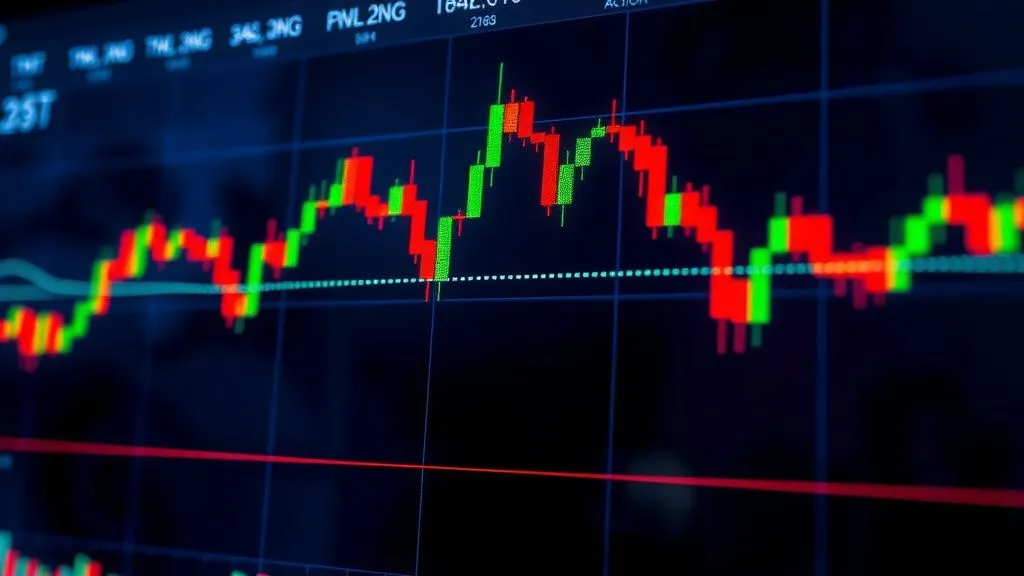
Candlestick charts combined with volume data can provide powerful insights into potential reversals or continuations. For example:
- A bullish candlestick pattern appearing with high volume may indicate strong buying interest.
- Conversely, if a bearish candlestick forms with high selling volume, it might suggest increasing downward pressure.
h3
Technical Indicators
Several technical indicators incorporate volume data:
- **On-Balance Volume (OBV):** Measures cumulative buying and selling pressure as a running total.
- **Accumulation/Distribution Line:** Indicates whether an asset is being accumulated (bought) or distributed (sold).
- **Chaikin Money Flow:** Combines both price action and volume over time to gauge buying/selling pressure.
/h3
h2
Case Studies: Real-World Applications
To illustrate the significance of market volume analysis, consider these case studies:
h3
1. Stock Trading Example
During periods leading up to major announcements (e.g., earnings reports), stocks often experience spikes in trading volumes. By analyzing these spikes alongside historical performance patterns, traders can better anticipate potential price movements.
/h3
h3
2. Cryptocurrency Markets
Cryptocurrencies like Bitcoin have demonstrated dramatic shifts based on changes in trading volumes. For instance, substantial increases in Bitcoin's daily trading volumes have preceded major rallies historically.
/h3
h2
Challenges in Market Volume Analysis
While valuable, analyzing market volumes comes with its own set of challenges:
ul
li>Noisy Data:The volatility inherent in certain markets can lead to misleading signals due to sudden surges or drops in trade activity./lil
li>Pump-and-Dump Schemes:Anomalies created by manipulative practices could distort true demand./lil
li>Lack of Contextual Information:A spike without context does not always imply a trend change; external factors should also be considered./lil
/ul
h2
Conclusion: The Power of Market Volume Analysis
In conclusion, understanding market volume analysis is essential for anyone involved in trading or investing across various financial instruments. By recognizing patterns and trends indicated through careful examination of trade volumes alongside price action—traders equip themselves with vital information that enhances decision-making processes.
p
As you delve deeper into your investment journey remember: while quantitative measures such as numbers tell part of the story—understanding their context provides clarity beyond mere figures alone.
p
Whether you're evaluating stocks using traditional methods or exploring innovative assets like cryptocurrencies—mastering how to analyze & interpret these metrics will serve as an invaluable tool towards achieving success.
/article